
CALL US TODAY!
(613) 270-1001
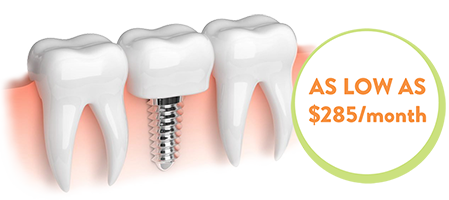
When a tooth is missing or cannot be saved, a dental implant can replace the tooth root and support a natural-looking crown. Dental implants are designed to restore the appearance, stability, and function of a missing tooth.

Dental implants replace the tooth root and can help maintain the jawbone where a tooth is missing.

An implant is anchored in the jaw, providing a stable foundation for a replacement tooth without loose removable parts.

A dental implant crown is designed to blend with your surrounding teeth for a natural-looking smile and comfortable function.

With proper care and regular dental visits, dental implants can provide a long-term solution for replacing missing teeth.
A dental implant is a small titanium post that is placed in the jawbone to replace the root of a missing tooth. Once the implant has healed, it can support an artificial tooth, such as a crown, to restore the appearance and function of your smile.
Dental implants may be an option if you are missing one or more teeth and have healthy gums and enough bone to support an implant. If there is not enough bone in the jaw, a >bone graft may sometimes be recommended to create a stronger foundation for the implant. Your dentist will assess your oral health, jawbone, and overall needs to determine whether dental implants are appropriate for you.
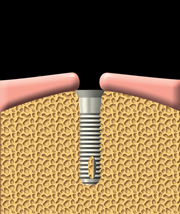
A dental implant is placed in the jawbone to replace the root of a missing tooth.
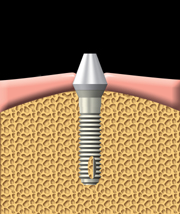
An abutment is attached to the implant and connects the implant to the replacement tooth.
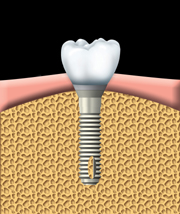
A replacement tooth is attached to the abutment to restore the appearance and function of the missing tooth.
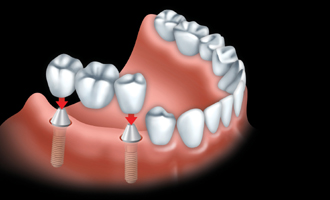
Dental implants can also support a fixed bridge when multiple missing teeth need to be replaced.
When a tooth is lost, the jawbone around the missing tooth can gradually shrink because it is no longer being stimulated by a tooth root. Nearby teeth may also shift over time, which can affect your bite and make it more difficult to keep the area clean.
Many healthy adults may be candidates for dental implants. Your dentist will evaluate your gums, jawbone, overall oral health, and the location of the missing tooth to determine whether an implant is appropriate for you. If additional bone is needed, a bone graft may sometimes be recommended.
Dental implant placement is typically performed using local anesthesia to keep you comfortable during the procedure. Some soreness, swelling, or tenderness can occur afterward, but your dentist will provide instructions to help manage your recovery.
Recovery varies depending on the procedure and your individual circumstances. Many people can return to normal activities within a few days, while more extensive procedures may require additional recovery time. Your dentist will provide specific instructions based on your treatment.
If there is not enough bone to support an implant, your dentist may recommend a bone graft to help build up the area. Whether grafting is needed depends on the amount and location of available bone and the type of implant treatment being planned.
Dental implants are designed to be a long-term tooth replacement option. How long an implant lasts depends on factors such as oral hygiene, gum health, bite forces, lifestyle, and regular dental care. With proper care and maintenance, implants can remain functional for many years.
Dental implants replace the root of a missing tooth and can support a crown, bridge, or other restoration. Unlike a traditional bridge, an implant does not require the adjacent teeth to be used as supports. Your dentist can explain the benefits, limitations, and expected maintenance of each option based on your oral health and treatment needs.
| Tuesday | 8:00am - 4:00pm |
| Wednesday | 9:00am - 5:00pm |
| Thursday | 9:00am - 5:00pm |
| Friday | 9:00am - 4:00pm |
| Saturday | 8:00am - 2:00pm |
| Sunday | Closed |
| Monday | 9:00am - 5:00pm |